In short
- True cost per kilo = purchase price ÷ yield.
- Run a yield test on your own knives and your own supplier.
- Re-test when you change supplier, grade or cook.
The price on the invoice is the price of what arrived. The price of what you can serve is higher. The gap between the two is yield, and it is the most common reason a "cheap" dish is not cheap.
The yield test in four moves
- Weigh the item as purchased.
- Trim, bone or peel it the way your kitchen normally does.
- Weigh what is usable.
- Divide usable by purchased.
true cost per kg = purchase price per kg ÷ yield
Example: a whole chicken
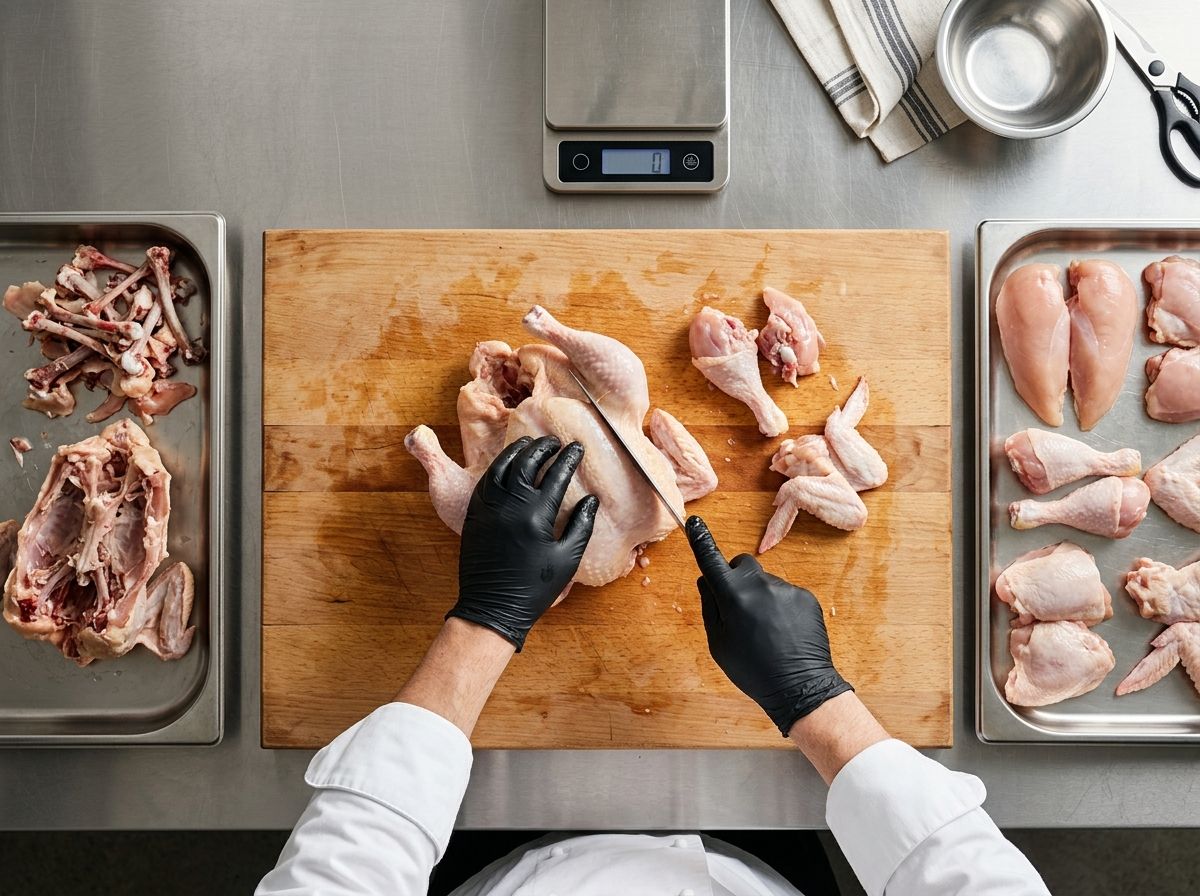
A whole chicken weighs 1.8 kg and costs 5.50 per kilo, so 9.90. After breaking it down, you get 0.72 kg of boneless breast and thigh meat.
true cost per usable kg = 9.90 ÷ 0.72 = 13.75
Your chicken is not 5.50 per kilo. As boneless meat it is 13.75. If your recipe calls for 150 g of boneless chicken per portion, the line costs 2.06, not 0.83. That is a big difference on a dish you sell every day.
Example: carrots
One kilo of carrots at 1.10 gives 850 g after peeling and topping. Yield is 85%, so usable carrot costs 1.10 ÷ 0.85 = 1.29 per kilo.
Do not forget what you get back
Carcasses become stock. Trimmings go into a staff meal or a soup. If you really use them, you can credit part of their value against the main cost. If they end up in the bin, you cannot. Be honest about which one happens in your kitchen.
Cooking loss is a second yield
Roasted meat shrinks. Rice swells. If your recipe uses cooked weight, test the cooked yield as well. Keep the two numbers separate: trim yield and cooking yield.
Questions
What is a typical yield for vegetables?
It varies by vegetable, season and how you trim. Onions and carrots often lose 10% to 15%, but test your own.
How often should I redo yield tests?
When you change supplier, product grade or the cook doing the prep, and at least once a year for your top ingredients.