In short
- Theoretical cost comes from recipes and sales. Actual cost comes from stock and purchases.
- The gap is waste, portioning, errors and unrecorded use.
- Count weekly, not only at month end.
There are two food cost numbers, and they rarely agree. Understanding why is how you find money.
Theoretical food cost
What your recipes say you should have spent, given what you sold.
theoretical cost = Σ (recipe cost × portions sold)
Actual food cost
What you really spent in the period.
actual cost = opening stock + purchases − closing stock
Worked example
| Item | Amount |
|---|---|
| Food sales (net) | 40,000 |
| Theoretical food cost (29%) | 11,600 |
| Opening stock | 6,000 |
| Purchases | 13,800 |
| Closing stock | 6,400 |
| Actual food cost (13,400 ÷ 40,000) | 33.5% |
| Gap | 1,800 (4.5 points) |
The numbers are invented, but a gap of a few points is normal in a kitchen that has never measured it.
Where the gap comes from
- Portion drift. Plates creep up by 10 or 20 grams until nobody remembers the recipe.
- Waste. Spoilage, over-prep, plate waste, dropped trays.
- Unrecorded use. Staff meals, tastings, items given away.
- Stock count errors. A missed freezer or a miscounted case moves the result.
- Old recipe costs. Prices rose and nobody updated the recipe.
- Sales recorded wrongly. Voids and comps that use up food are not in sales.
- Theft. Less common than people fear, more common than people admit.
A simple routine that works
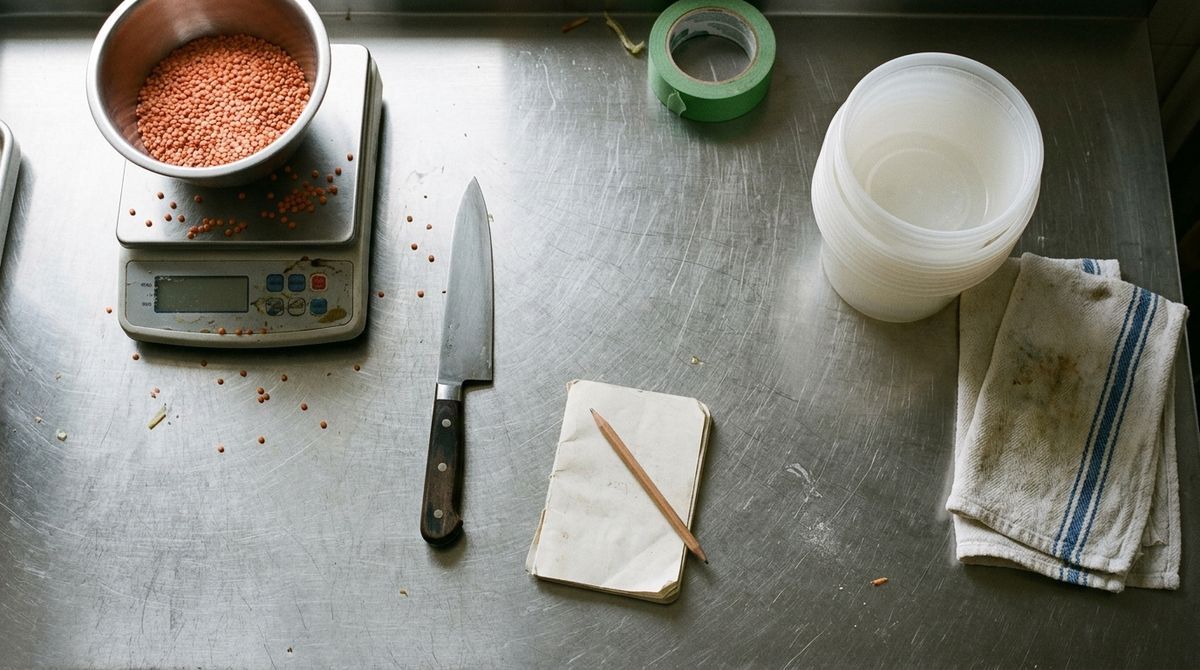
- Count your ten most expensive items every week.
- Compare used quantity with the quantity your sales explain.
- Investigate any item more than about 5% off.
- Fix the cause, then recount.
Start with accurate recipe costs. The costing method gives you the theoretical side, and the spreadsheet keeps it current.
Questions
How big a gap is acceptable?
There is no universal figure. Many operators try to stay within a point or two and investigate more than that.
How often should I do a stock count?
Monthly is the minimum. Weekly counts of high-value items catch problems much sooner.