In short
- Cost every ingredient at the price you actually pay, per gram or per millilitre.
- Adjust for trim loss before you add anything up.
- Divide the batch cost by portions, then compare it with the menu price.
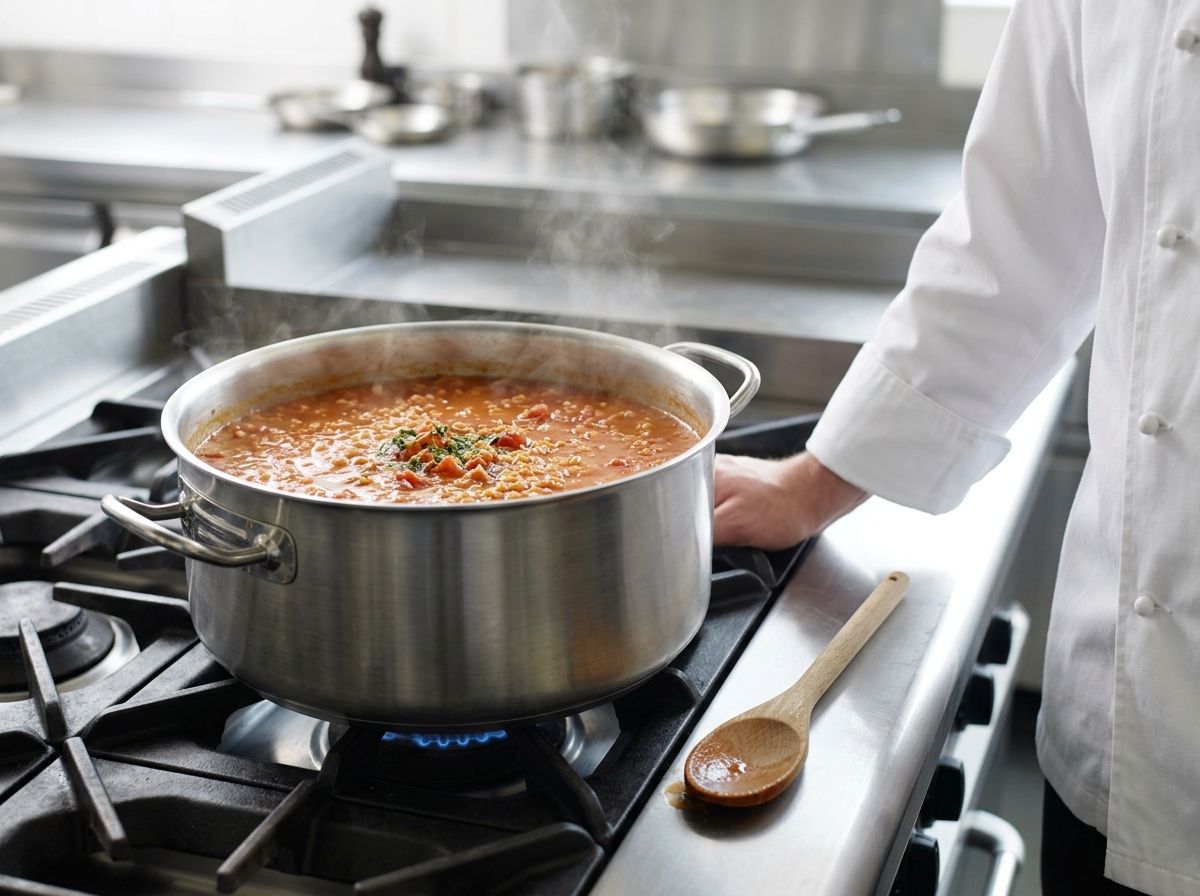
Costing a recipe sounds like office work. In practice it takes twenty minutes per dish, and it is the only way to know whether a dish earns its place on the menu. Here is the method I use, on a pot of tomato and red lentil soup that makes 10 portions.
Step 1. Write the recipe in weights
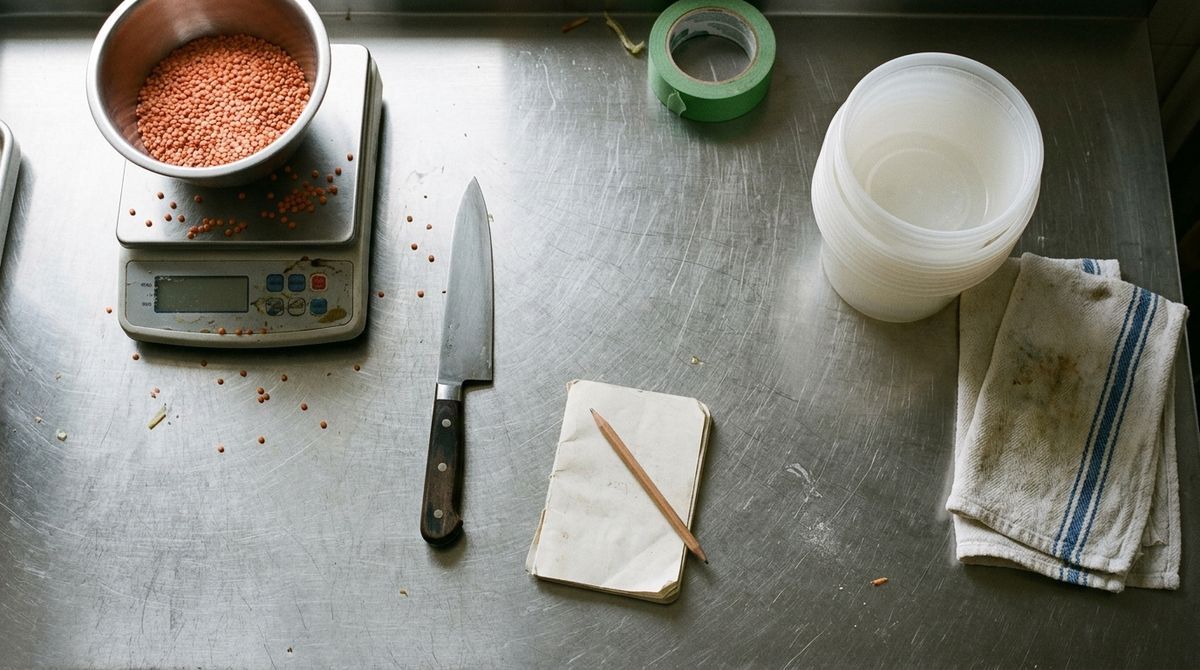
"A handful of parsley" cannot be costed. Weigh what goes in, once, and write it down in grams and millilitres. Do this on a normal service day with the cook who normally makes the dish, not on a quiet afternoon with your best hands.
Step 2. Turn each invoice price into a unit price
Take the price you pay and divide by the size of the pack. Red lentils at 2.40 per kilo cost 0.0024 per gram. Olive oil at 8.00 per litre costs 0.008 per millilitre. Do this once per ingredient and keep it in a list. When a supplier changes a price, you change one number.
Step 3. Correct for yield
You pay for the vegetable as it arrives, but the recipe uses it peeled. If onions lose 10% in peeling, 300 g of peeled onion needs 333 g bought. Carrots lose about 15%, so 300 g peeled needs 353 g bought. The yield article shows how to measure this in your own kitchen.
Step 4. Price each line
| Ingredient | Bought qty | Price | Line cost |
|---|---|---|---|
| Red lentils | 600 g | 2.40 / kg | 1.44 |
| Onion (300 g peeled) | 333 g | 0.90 / kg | 0.30 |
| Carrot (300 g peeled) | 353 g | 1.10 / kg | 0.39 |
| Tomato paste | 100 g | 4.00 / kg | 0.40 |
| Olive oil | 80 ml | 8.00 / L | 0.64 |
| Ground cumin | 10 g | 14.00 / kg | 0.14 |
| Bouillon powder | 60 g | 6.00 / kg | 0.36 |
| Batch total | 3.67 |
The prices are invented to keep the example clean. Use your own invoices.
Step 5. Divide by portions
Round to 0.37. If you serve a different portion size than you cooked for, fix the portion count first. A "10 portion" pot that really serves 8 is the most common mistake I see.
Step 6. Compare with the menu price
At a 30% target, this soup could sell for about 1.22 (0.367 ÷ 0.30). Nobody sells soup for that, and you should not. Soup is a low-cost dish: at a menu price of 4.50 its food cost is 8.2%. That room is exactly what pays for the dishes that run above target. This is why you cost the whole menu, not one dish at a time.
Questions
How long does it take to cost a recipe?
About twenty minutes for the first dish, mostly weighing and finding prices. Once your ingredient prices are in a list, a new dish takes five to ten minutes.
Should I include salt, pepper and water?
Add a small flat allowance for seasoning and pantry items you do not weigh, for example 3% of the batch cost. Do not count tap water.