In short
- Water is an ingredient and a cleaning agent: contaminated water contaminates everything.
- E. coli and enterococci must be absent in 100 mL of drinking water.
- If you use a storage tank, test more often and check chlorine every week.
Water washes your vegetables, cooks your rice, makes your ice and rinses your equipment. If it is contaminated, your whole HACCP system is undermined. It is also one of the cheapest things to test.
What the lab looks for
- Escherichia coli: must be absent in 100 mL.
- Intestinal enterococci: absent in 100 mL.
- Total coliforms: absent in 100 mL.
- Sulphite-reducing clostridia, and total germs at 22 °C and 37 °C in some schemes.
- Basic chemistry: pH, turbidity, conductivity, nitrates, nitrites, ammonium and free chlorine.
In the EU the reference is Directive (EU) 2020/2184. In Morocco, ask your laboratory which standard it applies (the drinking water standard is reported as NM 03.7.001, so confirm the current edition).
How to sample
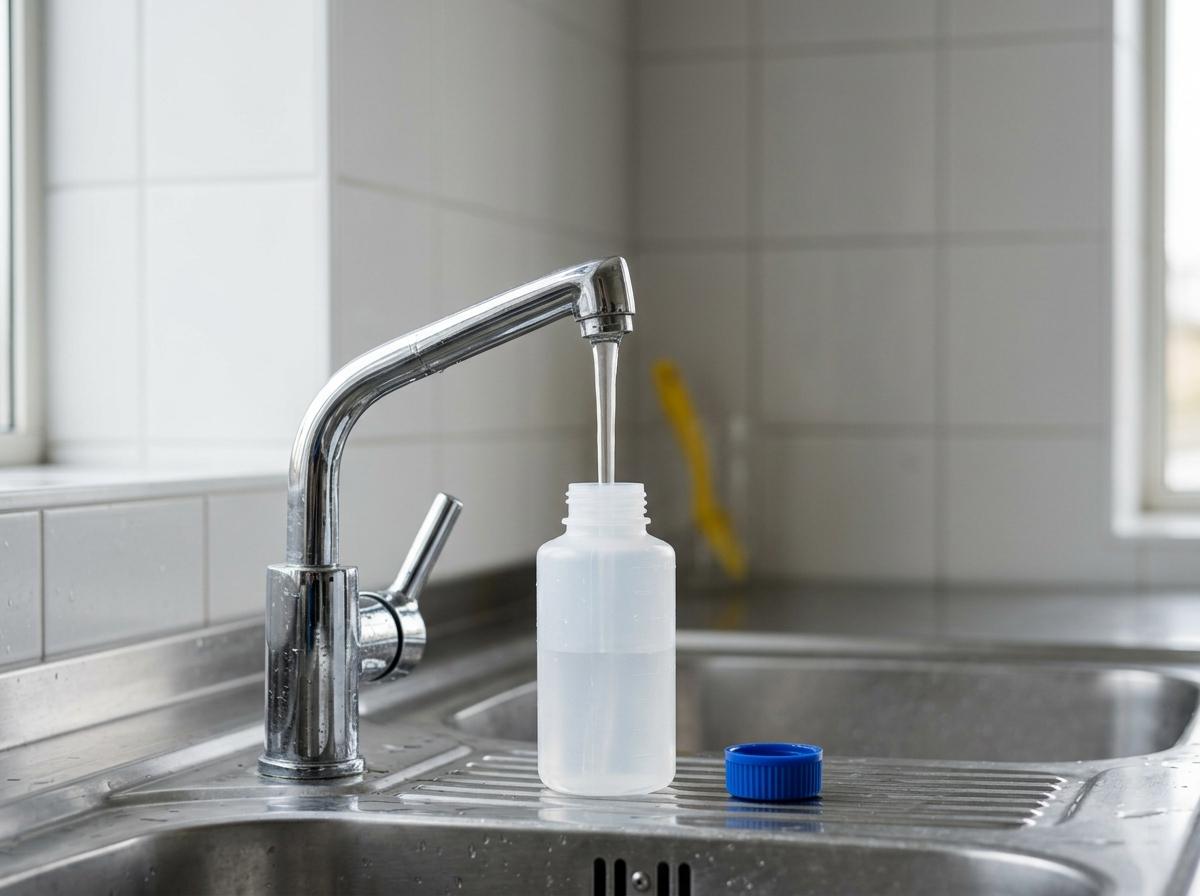
Use the sterile bottle with sodium thiosulphate that the lab provides: it neutralises chlorine so bacteria are not killed in the bottle. Flame or disinfect the tap, let the water run for a minute or two, then fill without touching the neck. Keep the bottle at 0 to +4 °C and deliver it quickly. Measure free chlorine on site with a test kit, because it changes within minutes.
How often
- Mains water straight to the kitchen: at least once a year, plus a chlorine check.
- Storage tank or cistern: twice a year as a starting point, with a weekly chlorine reading, and a tank clean each year.
Test again after any plumbing work, tank cleaning, flooding or a complaint about taste or smell.
Legionella
Legionella grows in warm water between roughly 25 and 45 °C and spreads in a fine mist, in showers, for example. It matters for hotels, holiday centres and residences with showers and hot water tanks. It is tested in hot water systems with ISO 11731, and results take around ten days. A common target is below 1,000 CFU/L, which is the EU parametric value used for priority buildings, but your national rule decides. Good practice is to keep stored hot water above 60 °C, avoid dead ends in pipes and flush rarely used taps.
If the water fails
Stop using it for food and drinks, switch to bottled or treated water, find the source (tank, pipe, filter), clean, disinfect and retest before going back to normal.
This article is general information, not legal advice. Rules and limits change: confirm the current text with your food safety authority (ONSSA in Morocco, your national authority in the EU) and with your accredited laboratory.
Questions
How often should a kitchen test its water?
At least once a year on mains water, and about twice a year if you use a storage tank. Add a weekly chlorine check on tanks and a retest after any intervention.
Do I need a Legionella test?
It is mainly relevant for hotels and accommodation with hot water systems and showers. Ask your authority what applies to you.
Why is the sample bottle special?
It contains sodium thiosulphate, which neutralises chlorine so that the bacteria in the water are not killed before they reach the lab.