In short
- A badly taken sample gives a result you cannot trust, even from a good lab.
- Use sterile containers and clean gloves, and never touch the food with bare hands.
- Keep the sample cold and deliver it quickly, usually within 24 hours, or follow your lab's own limit.
A laboratory can only analyse what reaches it. If the sample was contaminated on the way in, warmed in a car or left overnight, the result describes the sample, not your kitchen. These are the rules I follow.
Before sampling
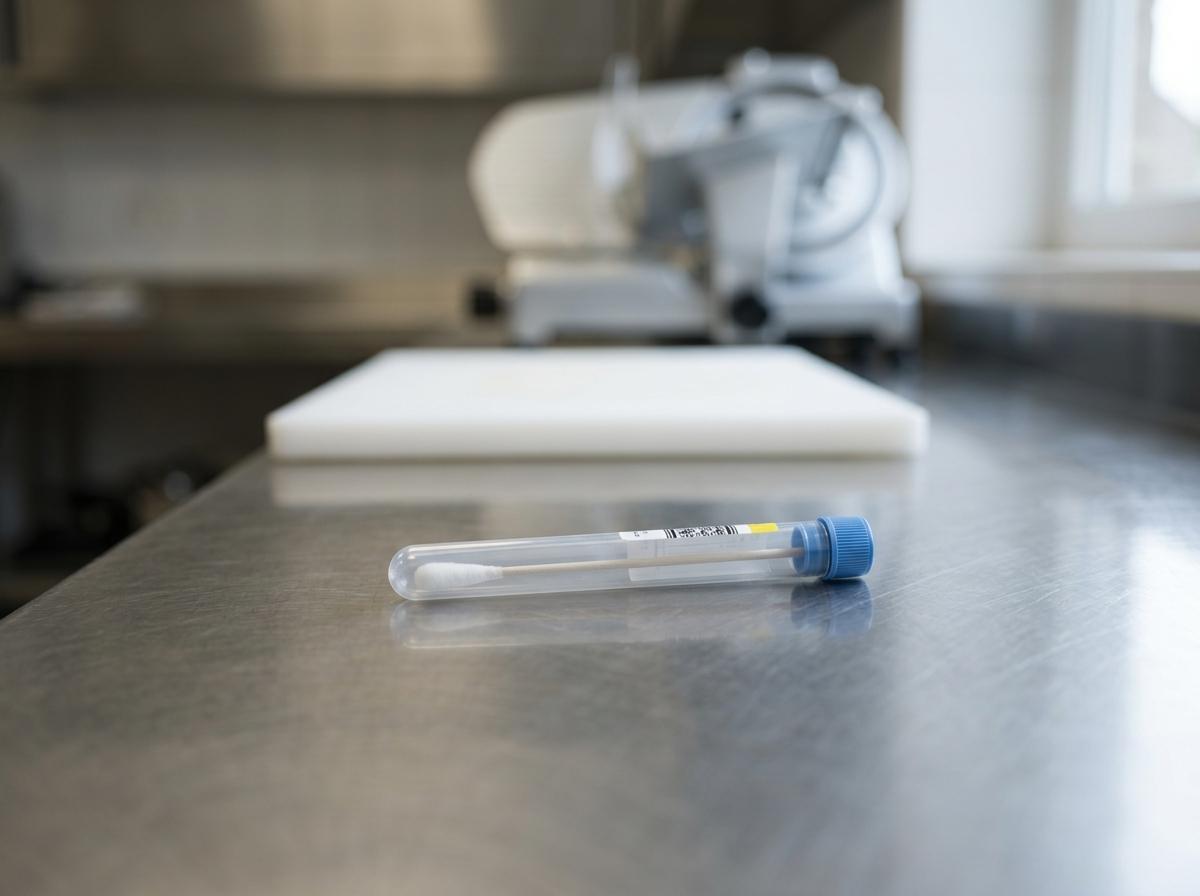
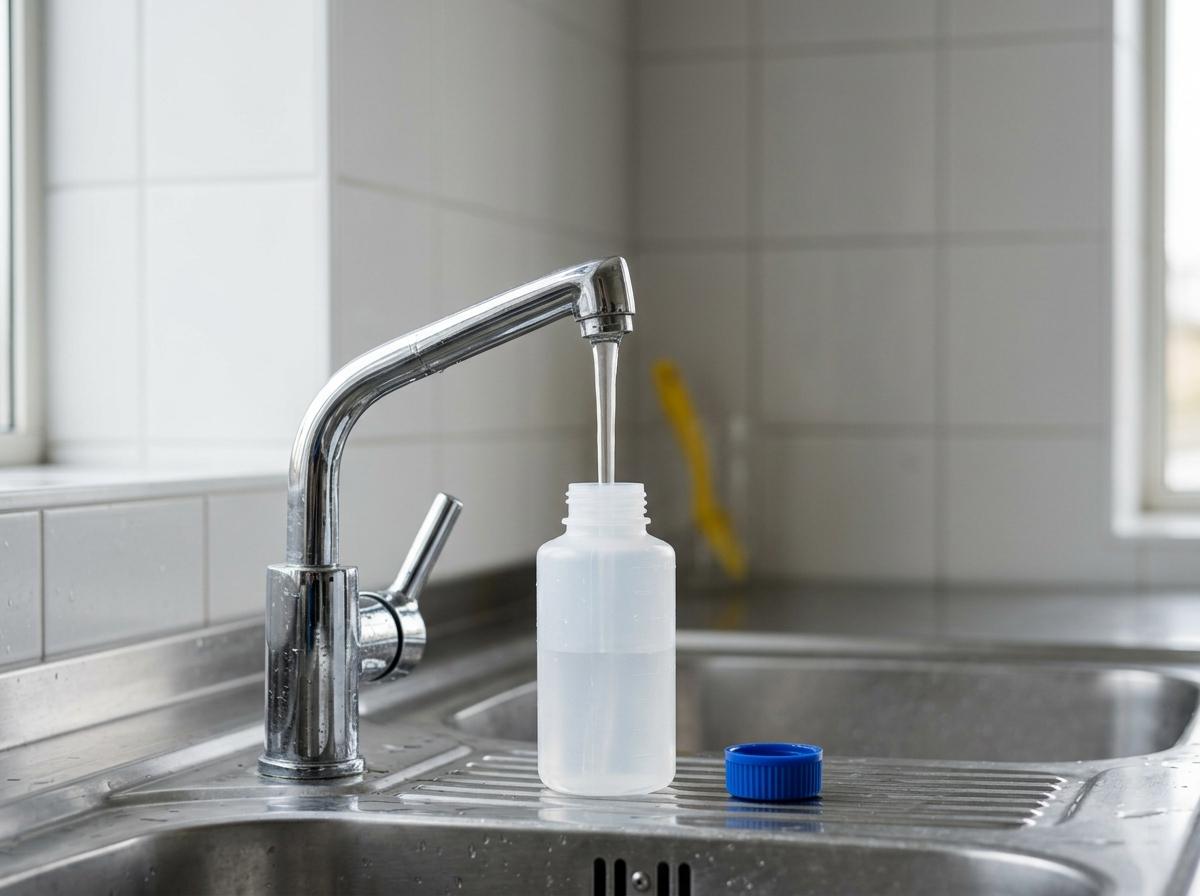
Ask the lab for sterile containers or bags and for their instructions. Wash and disinfect your hands, put on clean gloves and have a cool box with ice packs ready. Write the labels first: sample name, date, time and your name.
What to take
Take the dish as it would be served, from the service line or the cold room, not from a clean spoon prepared for the occasion. A typical amount is 100 to 200 g, and at least 25 g for a Salmonella test. Use a sterile spoon or tongs, and fill the container without touching the inside of the lid.
- For a hot dish, sample at the temperature it is held at, and record that temperature.
- For a dish served cold, sample it at the temperature it is kept at.
- For a sauce, take it from the middle of the pot, not from the edge.
Keep it cold
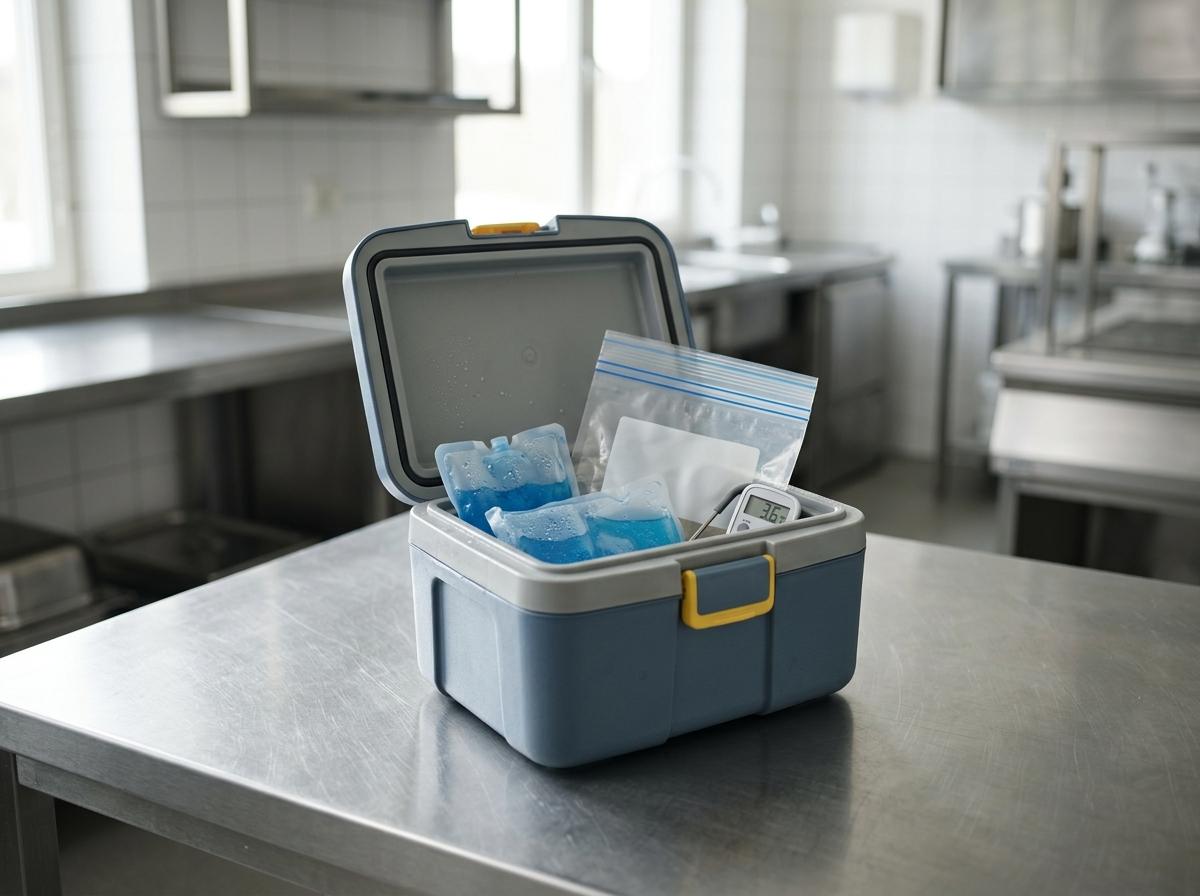
Place the sample straight into the cool box. The target is usually 0 to +4 °C. Do not freeze it unless the lab asks you to, because freezing can change the count. A small thermometer in the box proves the temperature during transport.
Send it fast
Bacteria keep growing after sampling, so the delay matters. Many labs ask for delivery within 24 hours. Take the sample early in the day, avoid weekends and public holidays, and tell the lab it is coming.
The paperwork
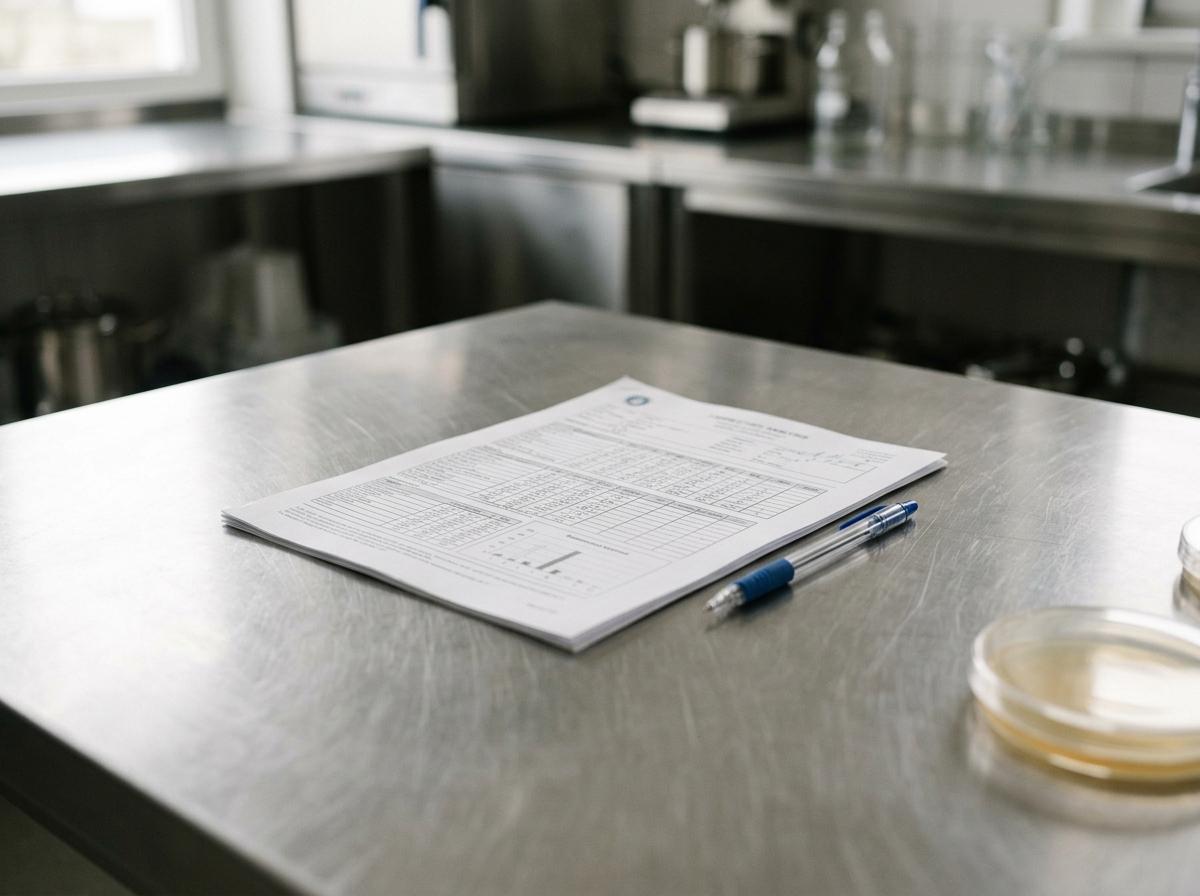
Fill a short form: what the sample is, when it was made, how it was stored, its temperature at sampling and why you are testing it. Keep a copy. The result report should list the same sample name so you can link both documents.
Common mistakes
- Using a food bag from the kitchen instead of a sterile one.
- Sampling a leftover that was reheated or kept out of the fridge.
- Leaving the sample in a car or on a shelf.
- Sampling right after a deep clean, which does not show normal working conditions.
This article is general information, not legal advice. Rules and limits change: confirm the current text with your food safety authority (ONSSA in Morocco, your national authority in the EU) and with your accredited laboratory.
Questions
How much food does the lab need?
Usually 100 to 200 g, and at least 25 g where Salmonella is tested. Ask your lab, because the quantity depends on the analyses.
Can I freeze the sample?
Only if the lab tells you to. Freezing can change bacterial counts, so the usual rule is cold, not frozen.
How long can a sample wait before analysis?
Most labs want it within about 24 hours, kept at 0 to +4 °C. Follow the limit your laboratory gives you.